Fiction Primer: Sources of Power
A previous fiction primer discussed the systems a pilot uses to control their mech in the worlds of Arbelos, Swarmworld Arcturus, and Harness. But as alluded to in that article, something has to make the giant robot go in the first place. Without a power source, even the mightiest machine with the most precise controls will sit inert.
In this fiction primer, we’ll discuss the power sources from the three worlds we’ve revealed so far, and one more to boot!
Combustion and Displacement Drives (Arbelos)
“M1, M2, get your engines burning, and skip the checks! Vedos, get the M-Traks clear of their camo – we need vision!” Sergeant Vedos moved from behind the cover of the supply crates to begin pulling the fishnet cover off Tahl’s machine.
With a quiet pop that jostled the air, the traks’ displacement drives came online. As ordered, Hazhlet and Tahl had fired up their M-Traks. Even as Vedos struggled to clear the camo from Tahl’s trak, there came the sound of shredding cloth. A mechanical arm pushed through the netting covering Hazhlet’s trak, then bent inward to seize the cloth with three articulated fingers. With another rip, the metal hand tore away most of the camo. It held the fluttering ribbons and netting it in its grip for a moment before releasing the whole mess into the abyss.
From Arbelos Chapter 2: Hollow Chase by Max Brooke
On Arbelos, most traks are powered by combustion fuels much equivalent to petroleum and its various specialized derivatives. This allows them to operate effectively in most theaters of combat, but requires maintaining close control of supply lines. A trak without fuel is a bunker at best, and a coffin at worst.’
The mysterious displacement drives (or “d-drives”) used by M-traks operating in the Precipice allow for seemingly infinite operation time. They are also far quieter than combustion engines, and produce no observable exhaust.
Mechanically, the d-drive is a vacuum engine, creating a vacuum inside internal chambers to move pistons using airflow, generating electricity in turn. However, unlike traditional vacuum engines, the d-drive does not use a flame to create the vacuum. Instead, the technical diagrams of the engine available even to its operators simply state that a current is run through “exotic materials,” which somehow removes air from the chambers instantly and seemingly without an output, save the occasional telltale popping noise.
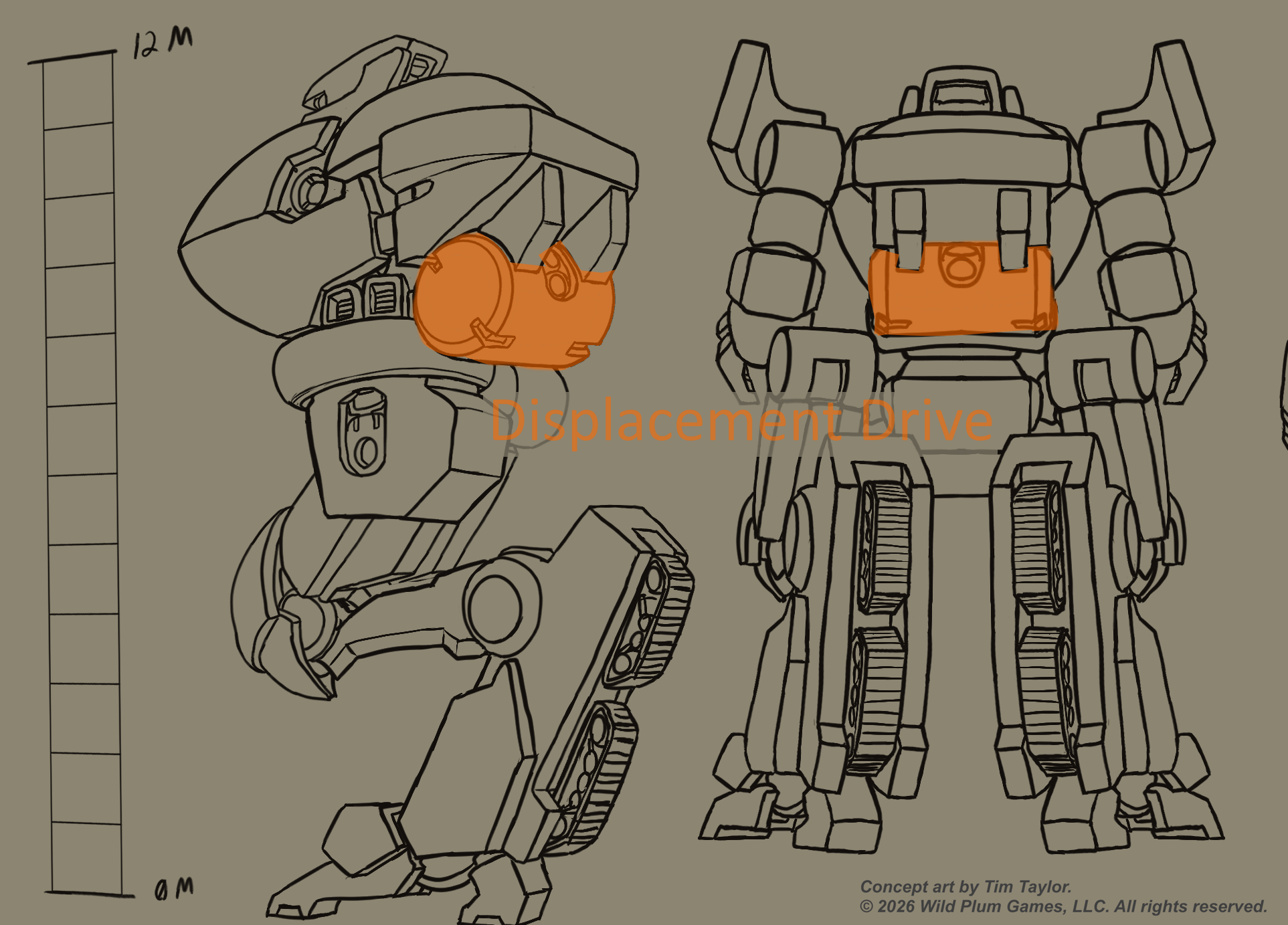
Pilots in the Varallen Irregulars and other military units that use M-Traks tend to be either superstitious or pointedly incurious about how d-drives actually function, and where exactly the air inside the engine is going…
Esoteric Processes (Swarmworld Arcturus)
The bloom’s five petals were opening by the time the mechafauna strutted past. Maris was awake. The shade under the house’s solar panels hid the bags under her eyes. There were two, both quadrupeds, Gilfaethwy and Hati, what most of the people of Antillia called “wolf-types.” Gilfaethwy was in the lead, lifting a mechanical foreleg in a slow, fluid motion that made him nonetheless look unhappy to be operational. Gilfaethwy’s spine arched high, bristling with solar collectors. Layered dermal plates shuffled over the faun’s internals. The titanium-alloy containers secured to Gilfaethwy’s flanks looked all the more rigid by comparison, wreathed in mist from the faun’s coolant exhausts. Gilfaethwy’s paired coilguns, on either side of his head, looked almost like horns.
Maris’s rooftop was a few meters lower than Gilfaethwy’s eyeline, though she would show up bright on the faun’s sensors. Gilfaethwy’s jerking gait paused as it passed.
From Swarmworld Arcturus 1: Maris by Brandon Perdue
Mechafauna are mysterious to the human arrivals on the Arcturus in a number of ways, not the least of which is their power source. While their power systems to output electricity usable for various modifications to the mechafauna humans have implemented, the way energy enters the system is less understood. The entire Swarm has been observed to draw solar energy into itself, and it is theorized that some of this energy makes its way into the mechafauna. There are multiple hypotheses for the pathway (or pathways) this energy follows, however, with no clear answers in sight.
Mechafauna are also capable of receiving power from human-made enhancements, which is sometimes necessary for the additional draws upon their power that their human handlers have added. As such, many refitted mechafauna also sport solar arrays to absorb the light of Arcturus directly, giving them access to supplemental power.
Aephygean Plinths (Harness)
Cante continued, staring insistently into the distance. “The plinths are only what’s left of their obelisks. And those were made in places like this. Or below them, as I now read it. In my library, I have some of their books.”
Orlondo thought for a moment. There had been centuries when such studies could have landed either of them in a cell, or worse. He’d seen the watchtower Locus Iusto had built in this valley, and the iron gates that had blocked the archway above, both long fallen to ruin or rust. And he knew he might be the first artist to come here since then.
“That’s not an answer to why you wanted me to draw this place.”
“No”, Cante shook his head. “I hoped your work might answer my question. How did the Aephygeans craft things of so much power? Or possibility?” Then he gestured again at the scene within the effluence, which was shifting once again to show feathery, yellow clouds among a pink sky.
Neither spoke for a long while. Both stood in contemplation.
“I think I will go up there after all.” Orlondo finally said.
Cante snorted. “After I tell you all of that? Why?” He asked in disbelief.
Orlondo thought for a moment. “Because maybe an answer can be had now, in our days. And because it’s my trade to show new things to my patrons.”
From Harness Chapter 4: Possibility by Michael Gernes
The plinths are relics of the Peninsula’s last empire, infused with the power to move great machines. In the reliquary of each great harness sits a segment of a plinth, giving motion to the massive armor and connecting it to its bearer. Even larger sections of these plinths are sometimes used to power large public works, such as the great fabric-weaving looms of Premonta that generate much of its wealth and prestige on the Peninsula through the textile trade.
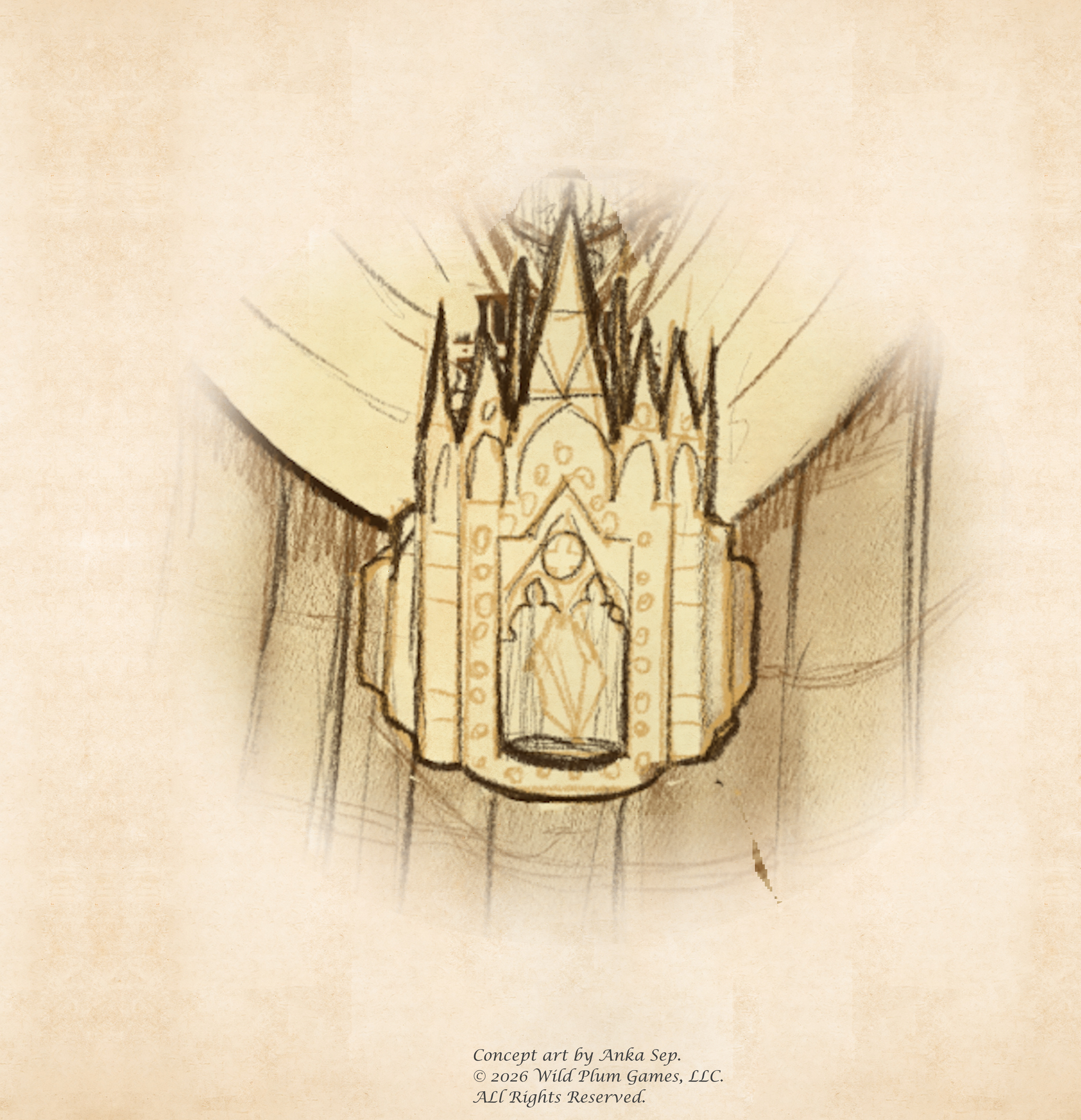
Plinths are not just practical and civic objects, however; they are also religious relics. Oblate’s pray over them to ensure their continued functioning, and the plinths emit a halo of light when active, a testament to their power. They are important symbols of reverence, yet their presence also carries a note of fear. Seeking greater understanding of Aephygean wonders was an act of transgression against the faith in the past, and a stigma lingers around such lines of thinking.
Coal and Steam (???)
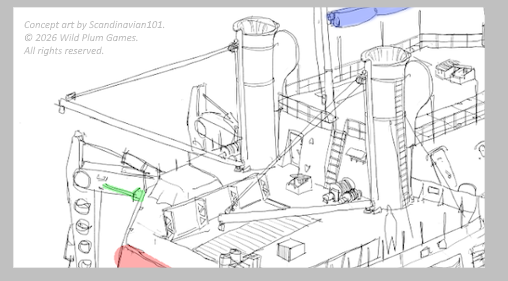
The first three worlds of Precipice primarily use futuristic and fantastical fuel sources. But what about something more close to home? What might the mechs of a world in the throes of its industrial revolution look like? You’ll have to return in a future week to find out, but for now, here’s a hint!