
The Art of Arbelos: Early Explorations
When I set out creating the world of Arbelos, I knew that I wanted a setting that evoked the mecha genre works I love most while also feeling fresh and interesting. That’s a tough ask, and I spent a lot of time thinking about it as I started outlining the first four Arbelos stories.
After one particularly fruitful conversation with my frequent collaborator Michael Gernes , I came to the conclusion that I needed to look back to the historical era from which the modern genre arose. This meant refreshing myself on the aesthetics, art, and history of the 1960s through the early 1980s. In particular, I looked at the futurism of this era as expressed through the big players of mecha and other speculative works. As science fiction always does, these reflected contemporary technologies, aspirations, and anxieties into a possible world to be.
I want Arbelos to feel a bit like a thriller novel (with robots) or obscure anime that might have premiered in that era. Obviously, it also carries its own contemporary influences and concepts, which you can read about starting in Chapter 1: The Drop!
This idea needed to come across both narratively and aesthetically. In this post, I’ll focus on the visual side of things.
Shadows of the Big War
The stories of Arbelos aren’t about an existential, world-spanning conflict. In fact, they focus on a much smaller conflict born of misplaced geopolitical ambitions and dubious foreign policy. But these stories do live in the wake of a ruinous war for survival, and that war has left important markers on the technologies and infrastructure of the world. Giant robots came together in a hurry on Arbelos, and their lineage as farming equipment shows in their designs (“trak” comes from “tractor”). In fact, many of their tanklike ancestors are still in service alongside more modern traks.
While the M-Traks that feature most prominently in the story are the cutting edge of Astiagen technology, I wanted them to still have a “clunkiness” that evokes their origins. And most of the machines they encounter are Shroud War surplus that have filtered down to splinter factions, mercenaries, or paramilitaries across the world.
Early Explorations
I cannot reliably use 2d drawing to visually explore an idea. Sometimes it works, but more often than not, I’m just not happy with it. So I set out trying to 3d model a robot in TinkerCAD, and it didn’t… go well. I’d done it from reference before, but the creative side wasn’t clicking.
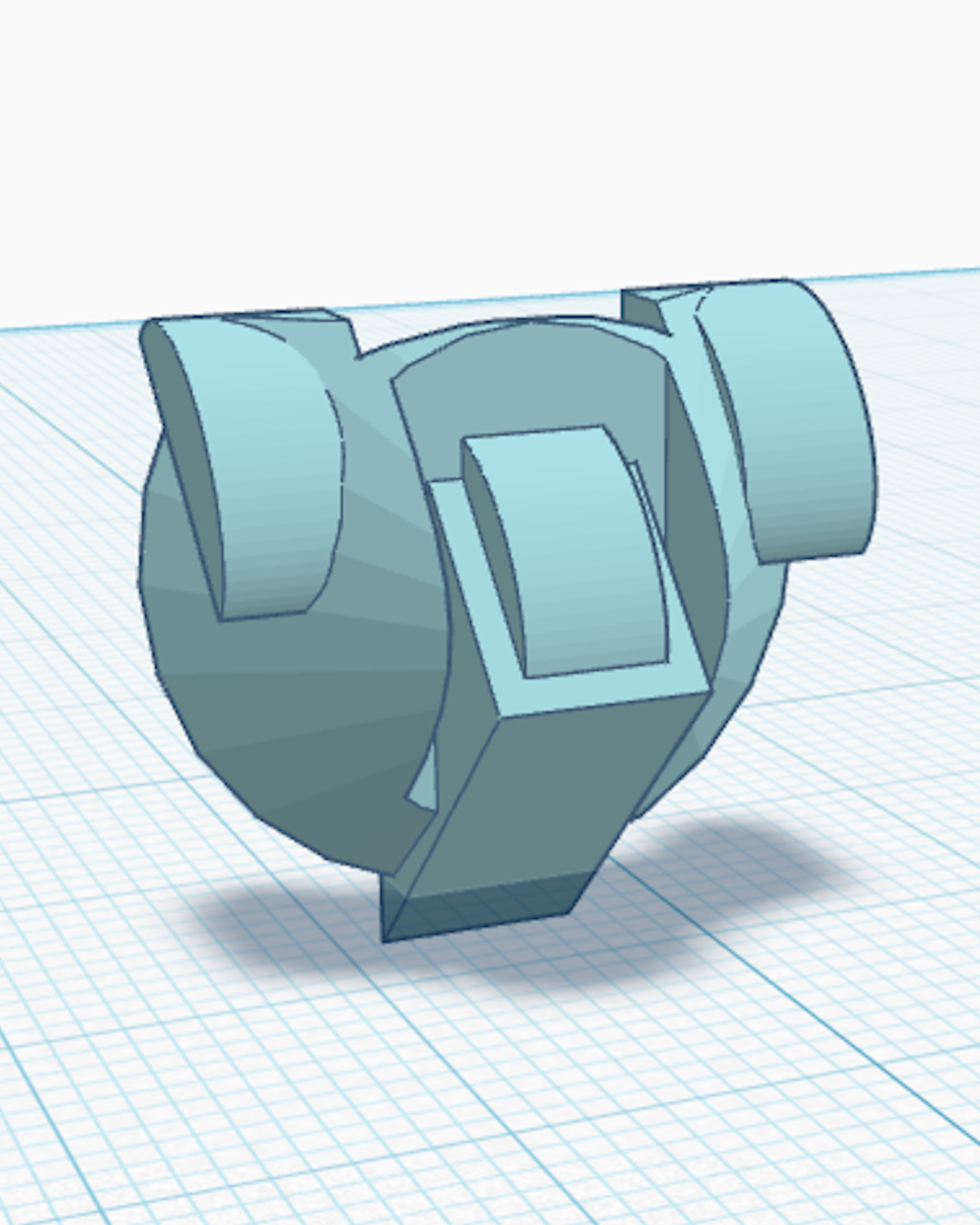
The breakthrough came when I realized that I didn’t have to start from a 2-dimensional reference. My years of puttering with Sculpey and greenstuff could be put to use here! Exploring a concept visually just works better for me when I’m working clay, and I set to it with great enthusiasm!
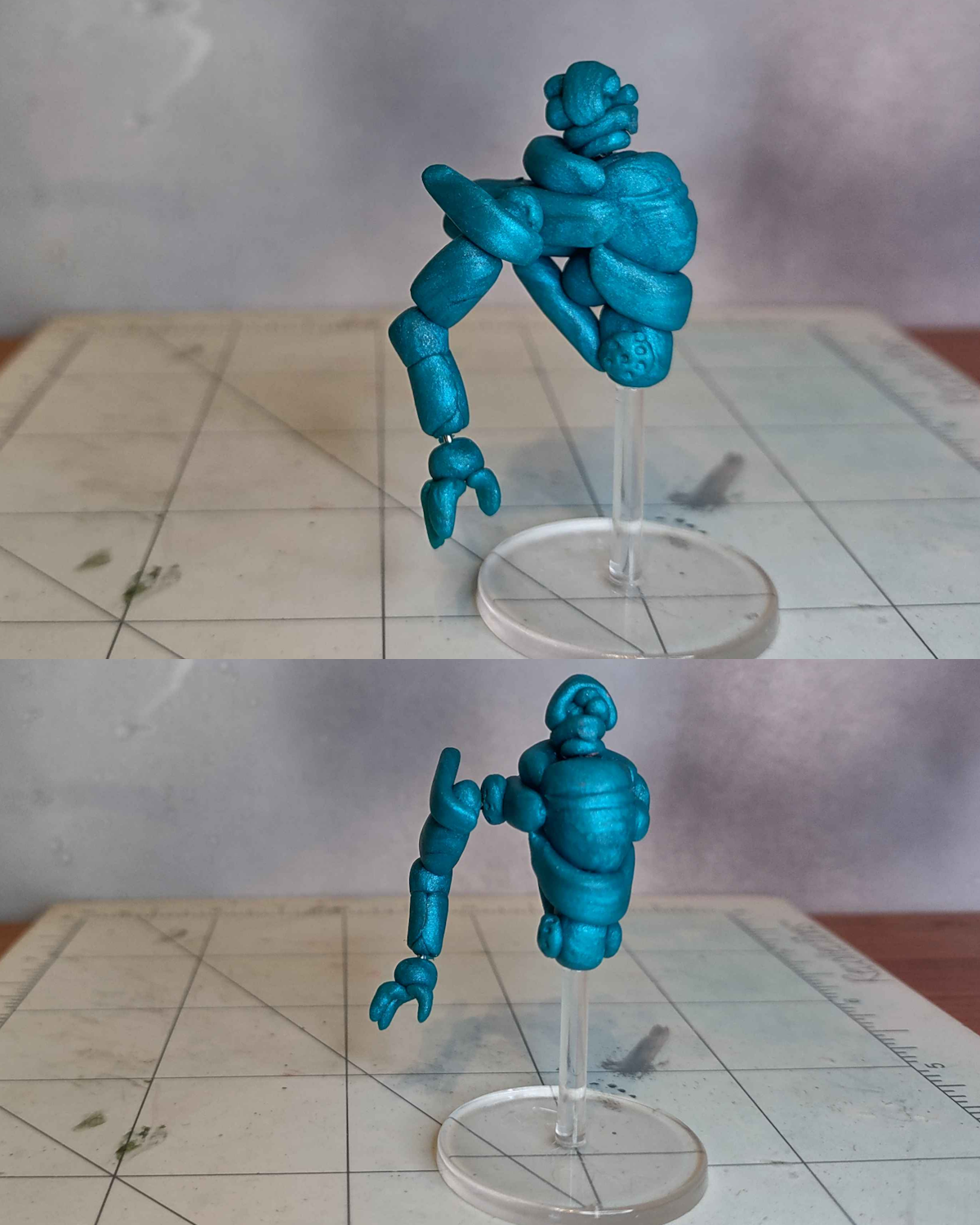
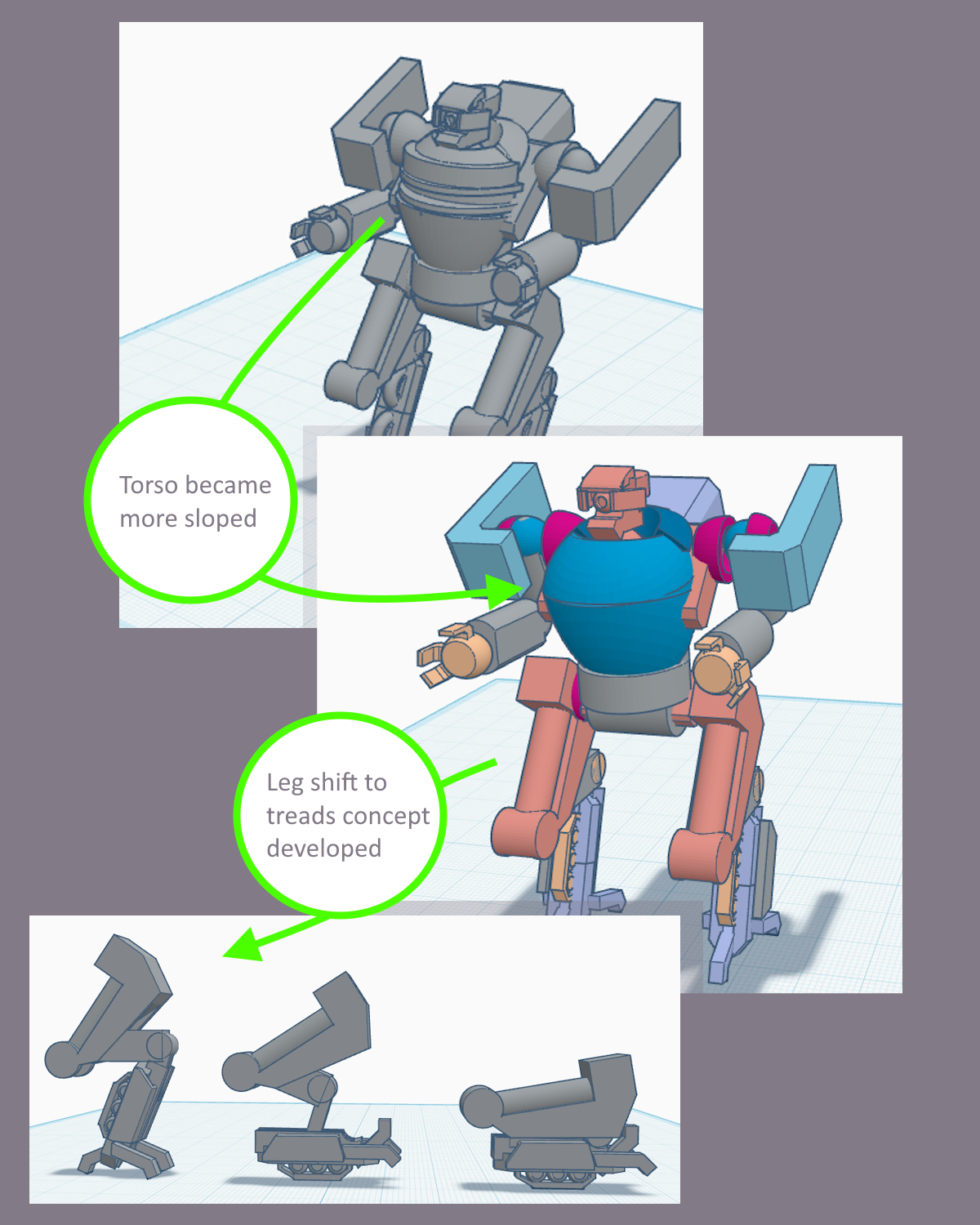
This “clay sketch” might not look like much, but it was the breakthrough I needed. Suddenly, I was fiddling with physical clay, then turning around and using those shape explorations to whip up a version in TinkerCAD.
This became a flurry of iteration as I looked at more 20th century combat vehicles as much as classic mecha. My frequent collaborator Brooks Flugaur-Leavitt offered her insights on the physics of deflection and 20th century vehicle armor design. I also tinkered on the cool-if-impractical leg transformation gimmick to hearken back to the older A-Traks.
Finding the Right Concept Artist to Make It Awesome
So I had a silhouette and ideas, but I also knew I needed someone to elevate them. And honestly, I got really lucky and found the right artist for Arbelos right off the bat. I came across Tim Taylor (@CosmicFlotsam) on Bluesky and as soon as I saw examples of his work, I was impressed. After we had a chance to actually talk, I knew he’d be a great fit for the job. Next time, we’ll discuss the process he and I used to take my amateurish muddlings and turn them into something really cool.